
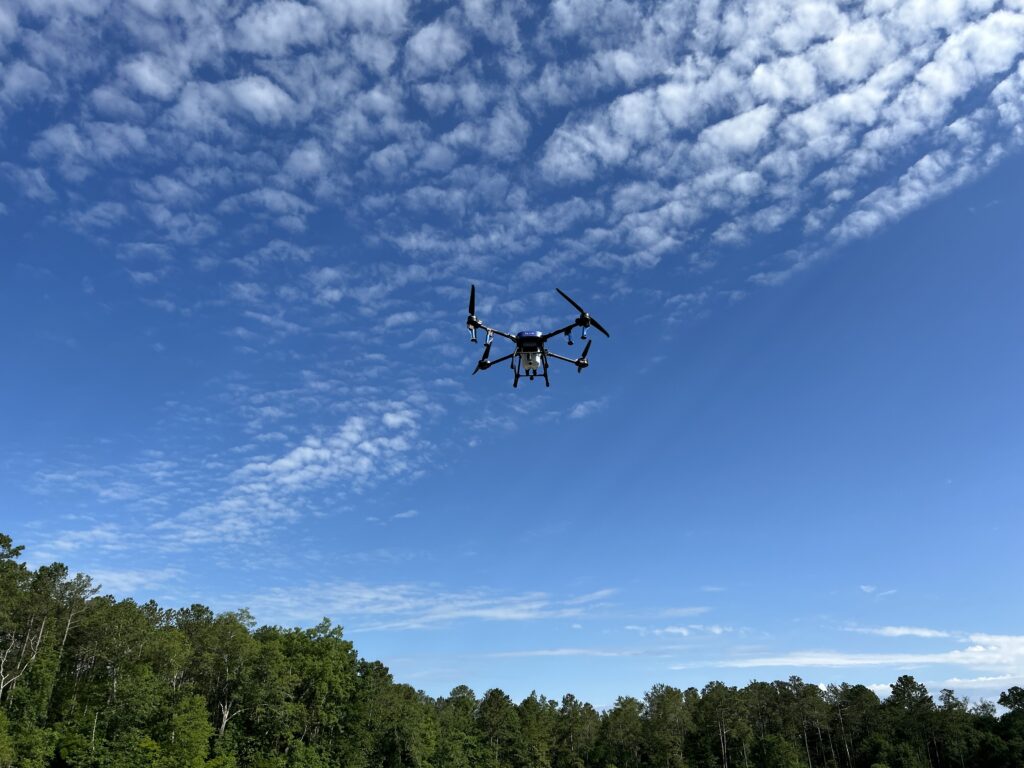
Managing vegetation, pest control, or treatment applications across large properties has always come with challenges. Traditional ground-based methods can be slow, disruptive, and limited by terrain, access roads, or safety concerns. Today, drone spraying is changing that equation —offering a faster, more flexible, and highly efficient solution for large-scale properties where speed and access matter most.
The Challenge of Large-Scale Coverage
Large properties such as utility corridors, airports, industrial sites, railways, solar farms, and expansive or open land require consistent maintenance to remain safe, compliant, and operational. Conventional spraying methods often rely on heavy equipment or ground crews that need clear access routes, significant setup time, and favorable terrain conditions.
In many cases, those conditions simply don’t exist. Remote areas, uneven ground, wetlands, or secure zones can turn routine spraying into a logistical headache—causing delays, higher costs, and unnecessary disruption to operations.
Why Drones Excel Where Traditional Methods Fall Short
Drone spraying technology was designed to overcome exactly these types of challenges. By taking to the air, drones remove many of the physical barriers that slow down ground-based equipment.
Here’s why drones are often the best choice for large properties:
1. Speed and Efficiency
Drones can cover more ground in less time than traditional methods. With pre-programmed flight paths and precise application systems, large areas can be treated quickly and consistently. This rapid coverage is especially valuable when turnaround time is critical, such as after severe weather events or within tight operational windows.
2. Unmatched Access
Road and vehicle access are no longer limiting factors. Drones can easily reach remote areas, steep slopes, wetlands, or restricted zones without disturbing the surrounding environment. This makes them ideal for utility corridors, airports, and wide-open properties where access is limited or unsafe for crews.
3. Minimal Disruption
Because drones operate from the air, they reduce the need for heavy machinery moving through active sites. This minimizes disruption to ongoing operations, traffic flow, and surrounding communities. For sensitive locations like airports or industrial facilities, this low-impact approach is a major advantage.
4. Precision Application
Drone spraying systems are designed to deliver accurate, targeted applications. This precision reduces overspray, minimizes waste, and helps ensure treatments are applied only where needed. The result is improved effectiveness and better environmental stewardship.
5. Enhanced Safety
Keeping crews out of difficult or hazardous terrain reduces the risk of injury. Drones handle the hard-to-reach and potentially dangerous areas, allowing operators to work from safer, controlled locations.
Ideal Use Cases for Drone Spraying
Drone spraying is particularly well-suited for:
- Utility corridors (power lines, pipelines, rights-of-way)
- Airports and aviation facilities
- Large commercial or industrial properties
- Solar and wind farms
- Railways and transportation corridors
- Wide-open land and remote areas
In each of these environments, speed, access, and minimal disruption are not just benefits—they’re necessities.
When Speed and Access Matter Most
Not every job requires drone spraying, but for large properties with complex access needs and tight timelines, drones often deliver the best overall solution. They combine rapid deployment, operational flexibility, and precise application into one powerful tool.
As industries continue to prioritize efficiency, safety, and environmental responsibility, drone spraying is quickly becoming the go-to choice for large-scale property management.
Ready to See If Drone Spraying Is Right for Your Property?
If you manage or maintain large properties and need a faster, more efficient spraying solution, drone technology may be the answer. Contact us to learn how drone spraying can streamline your operations, reduce disruption, and deliver results—no roads required.

Author: Zack Long